Cut the Cord.
Drop the Subscriptions.
Enjoy Free Local TV.
Drop the Subscriptions.
Enjoy Free Local TV.

Congress cancelled just over $1 billion in public broadcasting funding in 2025. More than a year later, almost every PBS station is still on the air, but donations replaced only about 13 percent of what was lost. Here's what actually changed.
Disclosure: This article contains affiliate links. If you buy through them, TV Stations Near Me may earn a small commission — at no extra cost to you.
On July 24, 2025, Congress passed the Rescissions Act of 2025 (P.L. 119-28), withdrawing funding it had previously appropriated for public broadcasting. The measure eliminated $535 million for each of the 2026 and 2027 fiscal years, about $1.07 billion in total, and it ended the federal contribution to the Corporation for Public Broadcasting. It arrived as part of a broader $9 billion rescissions package intended to reduce federal spending and, in turn, the deficit and the national debt. The CPB announced it would cease operations on August 1, 2025, and confirmed on January 5, 2026 that it would dissolve entirely, closing out a funding structure that had been in place since 1967.
It's worth being precise about what that did and didn't do, because "rescission" sounds more aggressive than the mechanics actually were. Nobody demanded repayment of grants stations had already received. CPB spent its final months distributing money it had already obligated, including a $57.9 million grant to form a shared infrastructure organization for public media. What Congress cancelled was funding for future years.
The reason it needed to be a rescission rather than an ordinary budget cut is that public broadcasting is funded two years in advance, a structure set up by the Public Broadcasting Financing Act of 1975 to let stations plan production and budgets on a longer horizon. The money for 2026 and 2027 had already been enacted into law, so withdrawing it took its own act of Congress. You can read more from PBS NewsHour on how the funding worked and how stations began absorbing the loss.
The predictions at the time were dire. Some said stations would go dark and that remote communities would lose the only broadcaster licensed to serve them. The reaction online was louder still. So it's worth asking, more than a year later, what actually happened.
The short version is that almost all stations stayed on the air, and your local PBS station is almost certainly not going anywhere. Very little of what was predicted came true. What did change is quieter than the headlines suggested, and it lands squarely on the pledge drive.
There's also an awkward gap worth naming up front. Public broadcasting generated a great deal of public anger for something most of the people expressing it were not watching. The numbers further down make that fairly plain. That doesn't make the cut good or bad, but it does mean the practical effect on the average household has been close to nil.
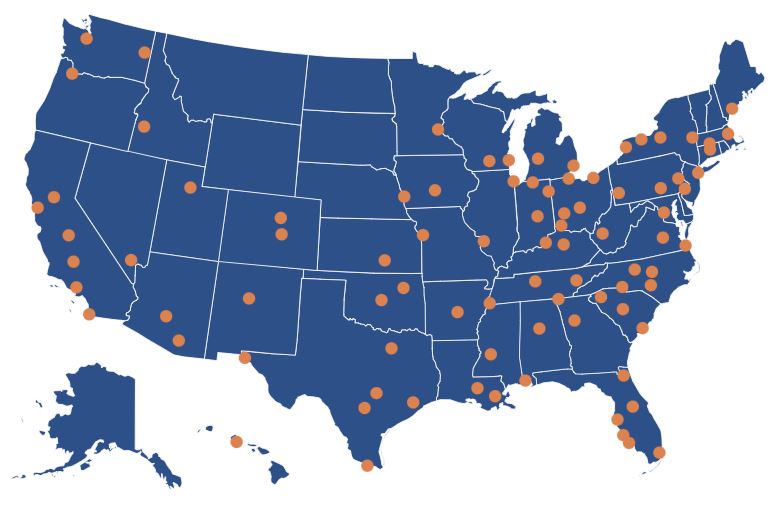
This is the part that surprises people, and you can verify it yourself with a channel scan. Roughly 330 PBS member stations were affected by the cut. By one count, only about six have either shut down completely or dropped PBS programming altogether.
Even the closures that made national news mostly did not end in a dark transmitter. Penn State announced it would shutter WPSU, and New Jersey PBS, which broadcasts on WNJT and its sister stations, was headed for shutdown when WNET's management agreement expired. Both found another path. New Jersey PBS continues under Montclair State University, and WPSU was transferred to WHYY, the Philadelphia public media organisation, with the paperwork filed at the FCC in July 2026. Penn State's trustees had initially voted the transfer down before reversing course after a public campaign, and the endowments and gifts earmarked for WPSU moved to WHYY along with the station.
So if you run a channel scan today and still find your local PBS station exactly where it was two years ago, that isn't luck. It reflects how hard stations worked to stay on the air, and it's the outcome the system was built to protect.
The short answer: Public television did not disappear from the airwaves. Roughly six of about 330 PBS stations went away or dropped the programming. What changed is what those surviving stations can afford to do, which is much harder to notice from a channel scan.
The donation response was genuine and large. In the months after the cut, public media picked up around 120,000 new donors, worth an estimated $20 million a year. Every category of station, television, radio and joint licensees, saw double digit percentage growth in total donors. For public radio, it reversed four consecutive years of donor decline.
That is a real show of support, and it is the reason the shutdown predictions mostly did not come true.
Here is where the optimistic version of this story runs into arithmetic. The federal cut removed $535 million a year from the system. Donations across public media rose by roughly $70 million. That's somewhere around 13 percent of what was lost.
Before that sounds fatal, it needs one piece of context that reframes the whole story, and it's the number most of the coverage left out.
Federal money was only about 11 percent of public television's revenue to begin with. CPB Community Service Grants were the single largest line item, which is why losing them hurt, but nearly nine dollars in ten already came from somewhere else.
That's the part most people get wrong. Public television is widely assumed to be a government enterprise, and it never was. Here is where the other 89 percent actually comes from:
In practical terms, public television absorbed roughly an 11 percent revenue hit and replaced about an eighth of it in the first year. That's a serious blow to a sector with thin margins, but it is not an existential one, and it explains why the transmitters stayed on.
A gap that size doesn't show up as a station going dark, because going dark is the last thing any broadcaster does. It shows up everywhere else first, and it has.
Stations balanced their budgets by reducing staff and eliminating local programming. PBS itself cut about 15 percent of its national workforce, and hundreds of public media jobs disappeared across the country. A sample of what that looked like at the station level:
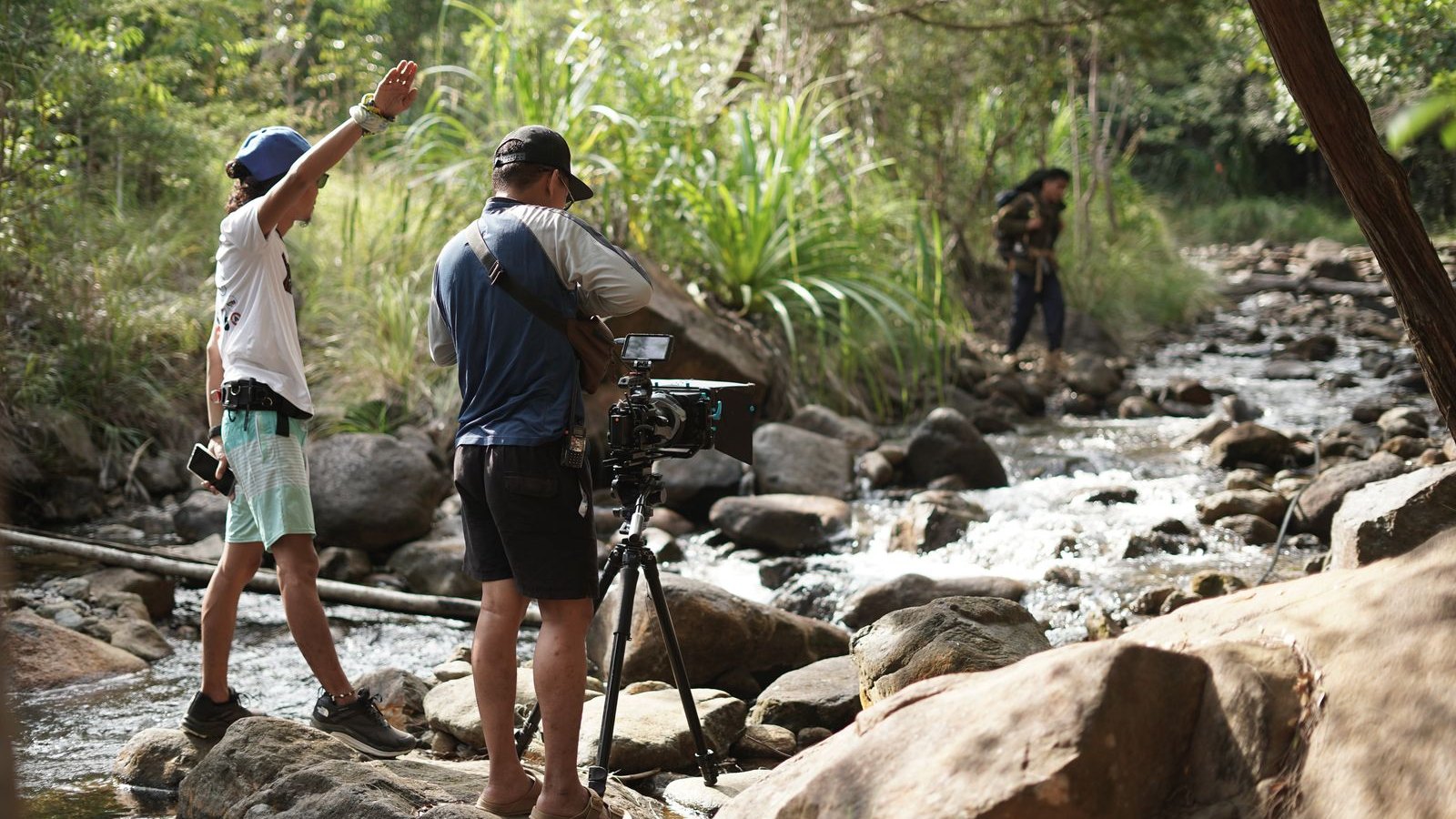
Notice the pattern. The signal keeps going out, but the local documentary unit does not come back. Local reporting and local production are expensive, and they went first.
It's worth asking how many people a station actually needs in order to stay on the air, because the answer explains everything above. If all a station does is rebroadcast the national schedule it licenses from PBS, the answer is: very few. Master control is heavily automated, playout runs on a schedule, and the transmitter mostly looks after itself between maintenance visits. A skeleton crew plus an engineer on call can keep a channel broadcasting indefinitely.
Everything beyond that is the expensive part. Reporters, producers, editors, camera operators, local documentary teams. Those are the jobs that got cut, and none of them are required to keep a picture on your screen. That's the whole reason your channel scan looks unchanged while 400 or more public media jobs disappeared.
WETA deserves a note here, because it isn't really a typical member station. It's the second largest producing station in public television, and it makes programming the entire system depends on: PBS NewsHour, PBS News Weekend, Washington Week, and Ken Burns documentaries including his 2025 film on the American Revolution. When WETA cancelled PBS News Weekend and closed the NewsHour West bureau, that wasn't a local station trimming local overhead. It removed a national program from the schedule everyone else carries. Those cuts land on viewers in every market, not just Washington.
Yes. PBS News Hour is still producing a full broadcast every weeknight, and it remains the network's flagship news program.
What ended was the weekend edition. PBS News Weekend aired its final broadcast on January 11, 2026 after nearly 13 years, and WETA closed the NewsHour West bureau in the same restructuring.
The weekend slot wasn't left empty. It was refilled with two new half-hour programs built around single subjects, which are cheaper to produce than a daily newscast: Horizons, hosted by William Brangham, covering science, technology and health, and Compass Points, hosted by Nick Schifrin, covering foreign affairs. Both launched that same January.
There's a decent argument that this is an upgrade rather than a downgrade. Science coverage and foreign reporting are two of the thinnest beats on American television, squeezed out of general newscasts by politics and weather for years. Handing each a dedicated half hour, hosted by correspondents who already cover those beats for the weeknight program, produces something no other broadcast network is offering on a weekend afternoon. If you care about either subject, you arguably came out ahead.
The honest counterweight is that these are pre-recorded and topic-locked, so the weekend no longer has a newscast that can turn on breaking events. And the change was driven by cost, not by an editorial decision that this served viewers better. Both things are true at once.
On audience, public television's news numbers are modest. PBS NewsHour averaged about 880,000 viewers in the most recent year Pew published. For scale, here is roughly where that sits:
So it sits at the bottom of that list, below every network newscast and below cable primetime. It's a real audience, but a niche one, and it's worth holding that number next to the volume of the reaction. Roughly nine tenths of one percent of the country watches News Hour on a given night. A great many people who were furious about the cut had not watched it in years, if ever.
Worth being straight about one thing, since it's the argument people reach for first: being free over the air is not what makes News Hour distinctive. The three network evening newscasts above it are all free over the air too, and they reach four to eight times as many people. What actually separates it is the format. It runs a full hour rather than 22 minutes of content, carries no commercial breaks, and gives individual stories far more room than a network newscast can. Whether that's worth it to you is a fair question, but it isn't a duplicate of something else on your antenna.
C-SPAN comes up constantly in this conversation, usually as evidence that the government already funds something similar. It doesn't.
C-SPAN has never received government funding. It's a nonprofit created by the cable industry, and roughly 99 percent of its revenue comes from fees paid by cable and satellite companies, on the order of seven and a half cents per subscriber per month. Congress doesn't pay for it. Your cable bill does.
Two consequences follow. First, you cannot get C-SPAN with an antenna. It's carried on cable, satellite and some streaming bundles, and it has no over-the-air signal anywhere. For a cord-cutter it isn't an alternative to anything. Second, C-SPAN's funding is tied directly to the number of cable subscribers in America, which means cord cutting is draining its budget year after year. It is arguably in worse structural shape than public television, just more quietly.
They also do different jobs. C-SPAN points cameras at proceedings and lets them run without commentary. That's valuable and it is not journalism in the reporting sense. Neither substitutes for the other.
This is where most people actually encounter PBS, and it's the reasonable thing to worry about. The answer has two halves, and they point in different directions.
What you watch is still there, and still being made. PBS Kids still reaches an estimated 95 percent of US households through over-the-air broadcasts, the 24 hour PBS Kids channel, and station streaming apps. New programming keeps arriving: Phoebe & Jay premiered, Super Why's Comic Book Adventures is due in autumn 2026, and Wild Kratts has an eighth season commissioned that will take it past 190 episodes. Sesame Street, as covered above, is now on PBS the same day it hits Netflix, better than the decade public television spent waiting on HBO.
But children's programming did not escape the cuts. PBS Kids lost roughly $30 million a year and reduced its staff by about 30 percent, and pulled more than 80 interactive games from its website and apps while streamlining its digital offering.
There was also a second cut that had nothing to do with the rescission. The Department of Education terminated the Ready To Learn grant, a programme that had provided PBS with more than $100 million across its 2020 to 2025 cycle and directly funded new children's series. Phoebe & Jay was the last property it paid for.
So the accurate summary is that the broadcast survived and the pipeline is thinner. The channel is on the air, the flagship shows continue, and new ones are still being commissioned, but the organisation behind them is meaningfully smaller and the free digital library shrank. If your household's relationship with PBS is a four year old and the kids channel, the day to day experience is close to unchanged. The strain is upstream, where the next generation of shows gets funded.
Worth knowing too: 95 percent of CPB's federal appropriation went out as grants to local stations rather than to PBS national. The money that disappeared was station money, not network money, which is why the effects showed up as local layoffs rather than changes to the national schedule.
The most visible sign that the non-federal model still works showed up in children's programming, and it ran opposite to the expected direction. Sesame Street had actually left public television for HBO back in 2015, meaning PBS stations only got new episodes after a delay of several months. When Warner Bros. Discovery declined to renew, Sesame Workshop struck a co-distribution deal with Netflix in May 2025. The terms put new episodes on Netflix and on PBS stations and PBS Kids platforms the same day.
So during the same stretch that public broadcasting lost its federal funding, its most famous program became more available on free over-the-air television than it had been in ten years. A streaming company paid for the production, and the free broadcast version came along with it.
Worth noting: Sesame Workshop is its own nonprofit, separate from PBS and from your local station. Its licensing revenue funds Sesame Workshop, not the station down the road, and it has had its own layoffs. The Netflix arrangement matters to PBS because of the distribution terms, not because that money flows to stations.
That's the shape of the emerging model: production paid for through partnerships and philanthropy, with free broadcast carriage as part of the deal rather than an afterthought. Stations are also working to convert the wave of one-time donors from 2025 into recurring sustaining members, which is worth considerably more over time than a single gift.
It's tempting to conclude from all this that public stations have simply learned to stand on their own the way commercial broadcasters do. That's most of the way true for large market stations, and it isn't quite available to the rest, for two reasons that are written into the license rather than the business plan.
They can't sell ordinary advertising. A noncommercial educational license permits underwriting, not commercials. Sponsors can be identified, but the announcements can't include calls to action, prices, or comparative claims about the product. That's why they sound the way they do: "this program was brought to you by" and a company name, rather than a pitch to go buy something. It's a genuine revenue stream, but a meaningfully smaller one than a commercial station's ad inventory, and no amount of fundraising skill changes that ceiling.
The second reason has to do with cable, and it's the one most people have never heard.
When a commercial station lands on your cable system, it usually gets paid for it. Local ABC, CBS, NBC and FOX affiliates negotiate retransmission consent deals, and cable companies pay them a monthly fee per subscriber. Those fees have grown into one of the largest revenue lines in commercial local broadcasting.
Public television stations cannot do this. Under the rules that govern cable carriage, noncommercial educational stations may only elect must-carry. They have the right to insist that cable systems carry them, but they have no right to charge for it. Your local PBS station is in nearly every cable lineup in its market and earns nothing from being there.
So when federal support disappeared, commercial stations had a large revenue stream that public stations structurally do not have access to.
Practically speaking, your channel lineup is close to what it was. PBS is still free over the air, still broadcasting in HD, and still running multiple subchannels in most markets. The kids' programming, the national documentary strands and the primetime schedule are all still there.
What you may notice over time is less local material. Fewer locally produced documentaries, fewer regional public affairs programs, and in some markets fewer hours of original local content in general. The national schedule is largely intact because it's produced centrally. The local layer is the part that thinned.
PBS stations also tend to run several subchannels, often including a dedicated kids' channel and a secondary channel carrying different programming. If you've only ever tuned to the main channel, there is usually more there than you realize, and all of it is free.
If you were worried that your local PBS station was about to disappear, the evidence says it almost certainly isn't. Roughly six stations out of 330 went away. Federal money was about 11 percent of the system's revenue, not the foundation it rested on, and the other 89 percent is still there. The transmitters stayed on, the national schedule is intact, and the channel scan you run tonight will look much like the one you ran three years ago.
Measured against the volume of the argument, this landed softly. The channel is where it was, the shows people actually watch are still being made, and for the overwhelming majority of households nothing observable changed at all.
What did change is the arithmetic behind the signal. The single largest line item on the balance sheet is gone, and the piece expected to replace it is viewer support. Those pledge drives were always a little easier to ignore when a federal appropriation sat underneath them. It doesn't anymore.
So this is one of the rare cases where the ask lines up with the facts. If you actually watch the thing, whether that's the kids' programming, the nature documentaries, the local public affairs show or just Antiques Roadshow on a Sunday, the donation they keep asking for is now doing noticeably more work than it used to. Public television is not collapsing. It is, more than at any point in the last fifty years, running on whether the people watching decide it's worth paying for.
Search your city or zip code to find your local PBS station, every subchannel it's running, and how strong a signal to expect at your address:
If a PBS subchannel is coming in unreliably, our guide to choosing between indoor and outdoor antennas is a good starting point, and our post on how one signal carries many channels explains why those extra channels sometimes drop out before the main one does.
Most of the reporting on this has been done by public media trade press and local newsrooms covering their own stations. If you want to go deeper:
*Requires Geolocation Approval
Directory Blog Privacy Policy Contact
This website contains affiliate links. We may receive commissions for purchases made through these links.